Materials & Sleep
Inside Naturepedic’s Approach to Organic Sleep Materials
A mattress can look serene from the outside and still be a complicated object beneath the sheets. Organic sleep products invite a closer reading: of fibers, fillings, construction, certifications and care. Here is how to think about Naturepedic’s materials-focused approach—and how to decide what matters for your own bed.
Published October 18, 2026
There is a particular pleasure in a bed that feels uncomplicated: a smooth cotton sheet, a breathable layer beneath it, a mattress that supports without demanding attention. But the materials behind that ease are rarely simple. A mattress may combine textiles, cushioning, structural components, adhesives and finishing treatments, each with its own purpose and its own set of questions.
Naturepedic is known for placing organic materials and product standards at the center of its sleep-product identity. That focus can offer a useful starting point for shoppers who want to understand what is inside a mattress or bedding layer. It is not, however, a substitute for reading the specifications of an individual product. Materials and certifications can vary by model, size, component and current production details.
The most useful approach is neither to treat “organic” as a magic word nor to dismiss it as mere styling. Instead, consider what a label actually covers, how a product is constructed, whether its feel suits your preferences, and whether its care requirements fit your everyday life. A little informed scrutiny can make the search feel less like a maze and more like a considered edit.
What “organic” means in a sleep product
Organic is a term about how certain agricultural materials are produced and handled under defined standards. In bedding, it may refer to cotton, wool or another natural fiber. The word does not automatically describe every component in a finished mattress, nor does it tell you whether the whole item has been certified. A product could contain a certified organic cover while using other materials in its comfort or support layers.
That distinction is important because a mattress is a layered system. Its cover may be cotton; its cushioning may involve wool, latex or another material; and its support may come from coils or a different construction. A label on one fiber should not be assumed to apply to every layer. When a product page uses broad language, look for a material breakdown that identifies the component, its composition and the standard associated with it.
It is also helpful to separate three related ideas: organic sourcing, chemical or emissions testing, and product performance. They can overlap, but they answer different questions. Organic certification generally concerns a defined supply chain or material standard. Testing may address particular substances or emissions. Performance describes such qualities as firmness, resilience, durability and temperature feel. No single term answers all of these questions at once.
Naturepedic’s emphasis on organic materials is therefore best understood as a framework for asking more precise questions, not as a guarantee that every person will find every mattress comfortable or appropriate. The practical details live in the model-specific specifications.
Reading certifications with a discerning eye
Certifications can make a complex supply chain easier to understand, but only if the shopper knows what is being certified. A mark may apply to a raw material, a processing stage, a finished textile or a particular component. It may also set requirements for chain-of-custody documentation, restricted substances or facility practices. The exact scope depends on the standard and the product.
For example, GOTS is a textile standard often associated with organic fibers and processing requirements. GOLS is associated with organic latex. Other standards and testing programs may address chemical content, emissions or responsible sourcing in different ways. These labels are not interchangeable, and their presence on one component does not necessarily certify an entire mattress.
When assessing a Naturepedic product—or any organic mattress—look for the certification name, the certified material or component, and whether the claim applies to the finished product or only part of it. If a product description refers to a certification without clarifying its scope, consult the manufacturer’s product documentation or ask for clarification. A trustworthy comparison is specific: it names the layer and explains what the standard covers.
Certifications can be valuable evidence, but they are not a measure of personal comfort. They cannot tell you whether a mattress feels too firm, whether a surface sleeps warm for you, or whether a particular construction suits your preferred sleeping position. Think of them as one column in your decision-making notes, not the entire scorecard.
The material story: cotton, wool, latex and coils
Natural materials are not one uniform category. Each has a distinct texture, response and maintenance profile. Organic cotton is commonly used in covers and quilted layers. Depending on its weave and construction, it may feel crisp, smooth or softly textured. A cotton surface can be appealing to sleepers who prefer familiar, breathable textiles, though the overall temperature experience also depends on the mattress’s other layers, room conditions and bedding.
Wool can appear as a filling or comfort layer. It is valued in bedding for its soft, springy hand and moisture-management qualities, though the experience depends on how much is used and how it is quilted or layered. Wool may also require different care from machine-washable cotton bedding. A product’s care label matters: natural does not automatically mean washable, and a material’s qualities can change with construction.
Latex is known for a buoyant, responsive feel. Some sleepers describe it as gently contouring without the slow, enveloping sensation associated with certain foams. Latex can be used in different ways and can vary in density and firmness. The word alone is not enough to predict how a mattress will feel; the layer’s thickness, formulation and position in the mattress all influence the result.
Coils provide a different kind of support, with a more spring-like response. Their design and arrangement affect how a mattress feels across the surface. In a layered mattress, coils may work alongside textiles and cushioning materials rather than acting alone. This is why comparisons are most useful when they describe the full construction, not simply a headline material.
Naturepedic’s material-led approach encourages shoppers to look beyond the cover. Ask how the components work together, what gives the mattress its support, and what the top layers contribute to comfort. The answers can help translate a list of materials into an expectation of feel.
Comfort remains personal
Material preferences are intimate. One sleeper may enjoy the gentle give of a responsive surface; another may prefer a flatter, firmer feel. Body shape, preferred sleeping position, temperature sensitivity and movement during the night can all influence how a mattress feels. Even the same model can be experienced differently by two people sharing a bed.
Firmness labels are useful as rough guides, but they are not universal measurements. A “medium” mattress from one maker may not feel like a “medium” from another. If possible, test the mattress in a way that resembles your actual sleep: spend enough time in your usual position, notice pressure at the shoulders and hips, and consider whether changing positions feels easy.
For couples, motion transfer and differing comfort preferences may matter as much as the material list. For a hot sleeper, the whole bedding system—including sheets, blankets, room temperature and mattress construction—deserves attention. For anyone with pain or a health concern, product marketing should not replace guidance from a qualified healthcare professional.
Organic materials can be an important preference, but they do not make a mattress inherently right for every body. A thoughtful choice brings together values, comfort, budget and practical needs. The most beautiful specification sheet is still only a promise until the surface feels right to you.
A closer look at organic bedding layers
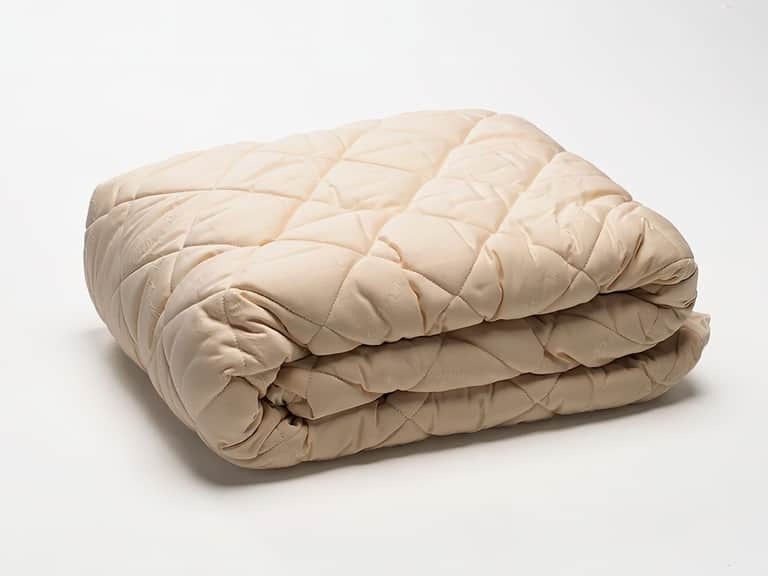
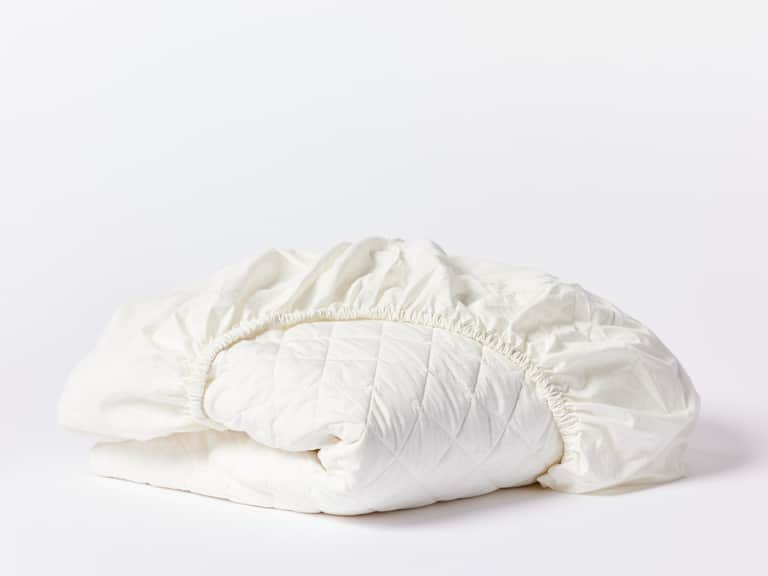
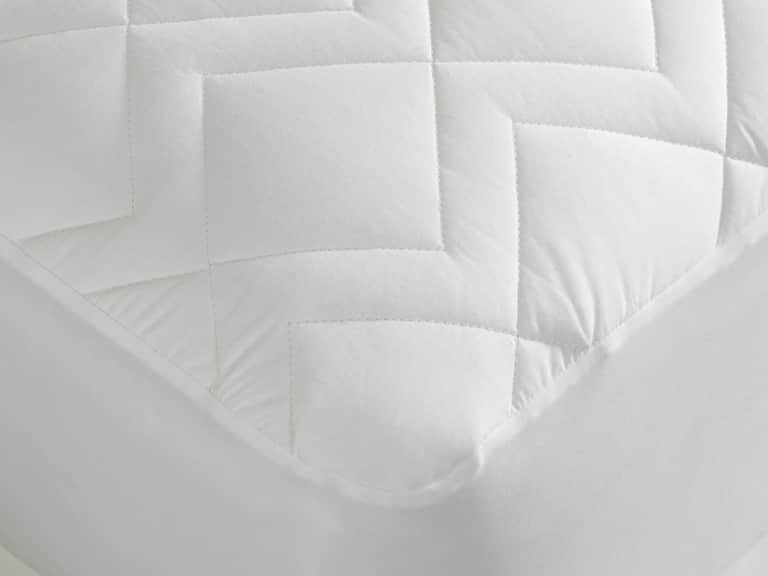
A mattress pad or protector can change the feel of the bed while also serving a practical purpose. Some add a little cushioning; others prioritize protection from spills, dust and daily wear. Their construction can affect surface smoothness, temperature and how securely a sheet fits. If you are exploring organic materials, check whether the claim applies to the cover, the fill or both.
For instance, the Organic Cotton Mattress Pad listed on this site is described as having organic cotton batting and a percale cotton cover, with GOTS certification noted in its specifications. Its two-inch quilted squares and 15-inch pockets offer practical details to compare against your mattress depth and desired amount of cushioning. As with any certification claim, readers should review the current product information for the precise scope and care instructions.
A pad is not a replacement for the support of a mattress. It can refine the surface, protect the underlying bed or add a modest layer of softness, but it will not correct a mattress that is substantially worn or unsuited to your needs. Consider the pad’s thickness, fit and laundering requirements before adding another layer to your sleep system.
Fit is particularly easy to overlook. Measure the mattress depth, including any existing topper, and compare it with the pocket dimensions. A pad that pulls tight may shift or strain; one that is too loose may bunch beneath the fitted sheet. The most elegant bed begins with layers that sit cleanly and stay in place.
Care, longevity and the everyday details
Materials that feel considered deserve care that is equally considered. Before buying, check whether the mattress cover is removable, whether a pad is machine washable, and what temperature or detergent the manufacturer recommends. Wool-filled products, for example, may have different care needs from cotton pads. Some mattress components are not intended to be washed at all, even when the removable bedding above them is easy to launder.
Care instructions are not an afterthought. They shape the real-life convenience of a product and can influence how it looks and performs over time. A washable protector may suit a busy household; a product requiring professional care may be a less practical choice for someone who wants a simple laundry routine. Consider the time, expense and effort involved before making a decision.
Protectors and pads can help limit everyday wear, but no layer guarantees that a mattress will last indefinitely. Follow the manufacturer’s guidance for rotating, supporting and cleaning the mattress. Use a compatible foundation, avoid folding a mattress unless the instructions allow it, and address spills promptly using the recommended method.
Durability is also a question of construction, not merely fiber origin. A well-chosen material can be undermined by an unsuitable fit or neglected care. Conversely, a product used within its intended purpose and maintained properly may remain comfortable and useful for longer. Think about how the item will be used, washed and stored before deciding that one material is automatically the better investment.
A considered checklist for comparing products
Whether you are looking at Naturepedic or another maker, a few targeted questions can bring clarity to a crowded market. Keep the product page open while comparing, and distinguish details that are clearly documented from language that is primarily descriptive.
- What is each layer made of? Look for a component-by-component description rather than a single broad material claim.
- Which part is certified? Note the certification, the material it covers and whether the claim applies to the full product.
- How is the surface likely to feel? Consider firmness, responsiveness, cushioning and the amount of contouring.
- How does it handle temperature and moisture? Evaluate the entire construction and your bedding, not just one fiber.
- What are the care requirements? Check washing instructions, removable components and any limits on cleaning.
- Will it fit your setup? Confirm mattress size, depth, foundation compatibility and any relevant weight or use guidance.
- Can you try it? Review the current trial, return and warranty terms directly, since policies can differ and change.
It may help to rank your priorities before shopping. Perhaps certification comes first, followed by a buoyant feel and easy care. Or perhaps a particular firmness and a generous trial period matter most. Naming your priorities makes it easier to compare two products without being distracted by a long list of features that do not affect your actual decision.
Organic construction without the shorthand
Naturepedic’s focus on organic sleep materials speaks to a wider shift in how people furnish their homes: fewer vague claims, more curiosity about what things are made of. That curiosity is worthwhile. A bed is among the most frequently used pieces of furniture in a home, and its comfort depends on a collaboration of fibers, layers, support and care.
Still, the language of organic sleep can become overly compressed. “Natural,” “organic,” “clean” and “non-toxic” are not synonyms, and none should be treated as a complete description of a product. A reliable assessment asks what material is present, how the claim is substantiated, which component it covers and whether the product meets the sleeper’s practical needs.
The best shopping experience is less about chasing a perfect label and more about understanding trade-offs. A breathable cotton cover may appeal to one household; another may prioritize a washable protector. A wool layer may offer a tactile quality someone loves, while another sleeper may prefer a different surface. There is no single material story that fits every bedroom.
The final measure: how it lives in your room
In the end, a mattress is not a collection of claims. It is the foundation of a nightly routine, shaped by the temperature of the room, the rhythm of the household and the way a person likes to rest. Naturepedic’s organic-material approach can help readers begin with a more informed question: what is this product made from, and what does that mean for its construction?
From there, move carefully through the details. Read certification language in context. Compare the materials in each layer. Test the feel where possible. Check the care label, fit and return terms. Treat marketing language as an invitation to investigate rather than a conclusion in itself.
When those practical considerations align with your values and comfort preferences, the result can feel quietly luxurious—not because a label promises perfection, but because you understand the choices beneath the sheets. That is the most useful kind of confidence: informed, personal and grounded in the details.
Frequently asked questions
Does “organic mattress” mean every component is organic?
Not necessarily. The term may refer to particular materials or certified components rather than every layer. Review the product’s construction and the scope of each certification.
Are organic materials automatically more comfortable?
No. Comfort depends on the complete construction, firmness, personal preference and how the mattress interacts with your body. Organic sourcing and comfort are separate considerations.
What should I check before buying organic bedding?
Check the material composition, certification scope, fit, surface feel and care instructions. For mattress pads, confirm pocket depth and whether the added cushioning is appropriate for your mattress.
Can a mattress pad make an old mattress feel new?
A pad can alter surface softness and provide a protective layer, but it cannot restore the underlying support of a worn mattress. Evaluate the mattress itself as well as any accessory layer.